Within hours, the political machinery in Washington shifted from a tense moment of shared alarm to a familiar and aggressive partisan offensive.
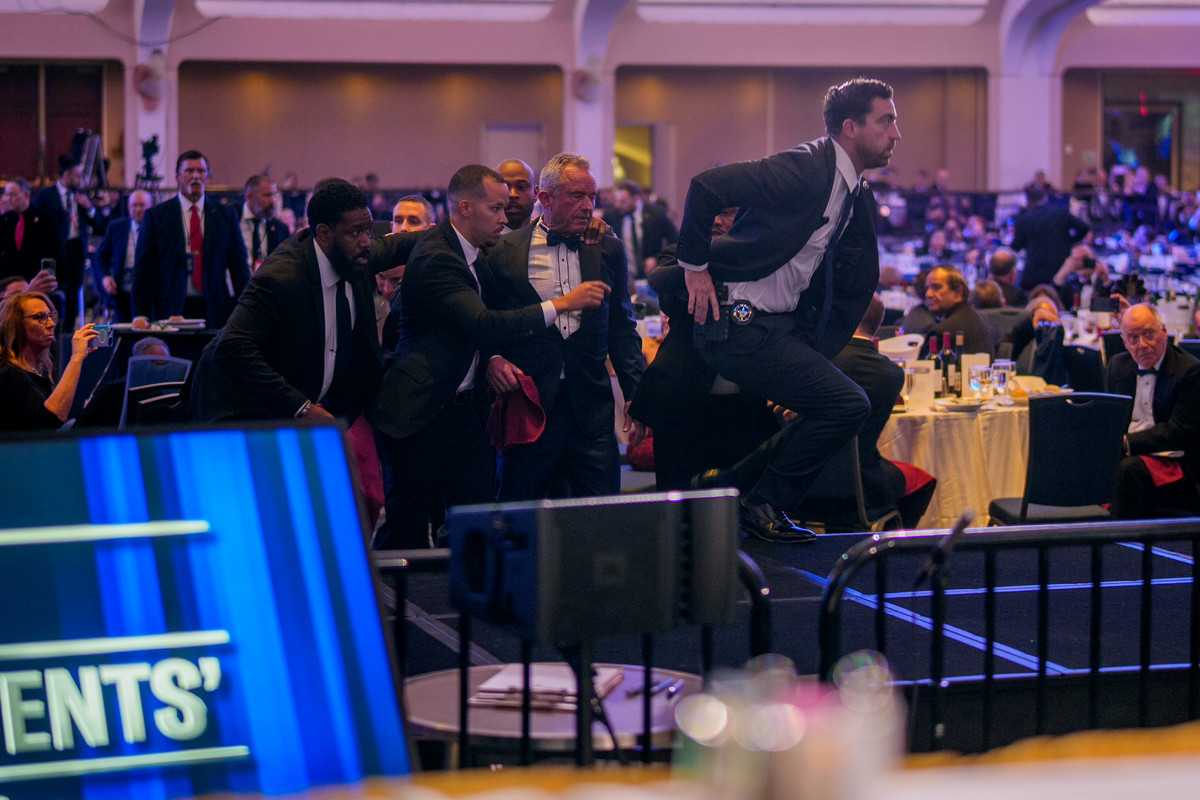
Republicans on Sunday moved swiftly to turn the security breach into a campaign weapon, accusing Democrats of fostering an environment that leads to political violence. The party’s strategy, honed after the two assassination attempts against Trump in 2024, followed a now-familiar arc: initial calls for calm, followed by pointed accusations that the opposition’s “dangerous and inflammatory rhetoric” is to blame.
Less than 24 hours after urging Americans to “resolve our differences,” Trump told CBS’s “60 Minutes” that “the hate speech of the Democrats … is very dangerous.” Republican National Committee Chair Joe Gruters described the incident as “the inevitable result of a radicalized left that has normalized political violence.” The official GOP campaign arms amplified the message, targeting specific Democratic candidates in key battleground states.
The party’s Senate campaign arm posted that “Democrats like Abdul El Sayed fuel this hate,” referring to the progressive candidate in the Michigan Senate race. In Maine, the group highlighted Graham Platner, the Democratic primary polling leader, citing since-deleted Reddit posts from 2018 in which he suggested violence with a gun was a necessary means for social change. Platner has disavowed those posts. In North Carolina, an RNC account criticized former Gov. Roy Cooper, a Senate candidate, for not publicly condemning the attack after previously calling Trump “a significant threat to our democracy.”
The Republican playbook was forged in the aftermath of the 2024 attempts on Trump’s life. In both instances, early bipartisan calls for unity gave way to accusations that Democrats had spent years stoking threats against the president by casting him as a danger to the republic. The party deployed a similar strategy after the killing of conservative activist Charlie Kirk last year, when top Republicans from Trump down blamed the “radical left” for inciting political violence.
No Evidence Links Rhetoric to Attacks
There is no evidence that Democratic rhetoric was behind either of the 2024 assassination attempts. The motive of Thomas Crooks, the gunman who opened fire at a Trump rally in Butler, Pennsylvania, in July 2024, remains unknown. He was killed by federal agents. Ryan Routh, who was convicted of attempting to assassinate a major presidential candidate after hiding in the bushes at one of Trump’s Florida golf courses with a semiautomatic rifle that September, was reportedly motivated by concerns over the war in Ukraine.
Democrats on Sunday denounced the shooting but pushed back against the Republican accusations. The incident also gave Republicans a new argument in the congressional stalemate over funding for the Department of Homeland Security, as they leveraged the security breach to press for additional resources. The pattern, now repeated across multiple high-profile incidents, underscores how moments of potential national crisis are rapidly absorbed into the country’s deepening political divide.