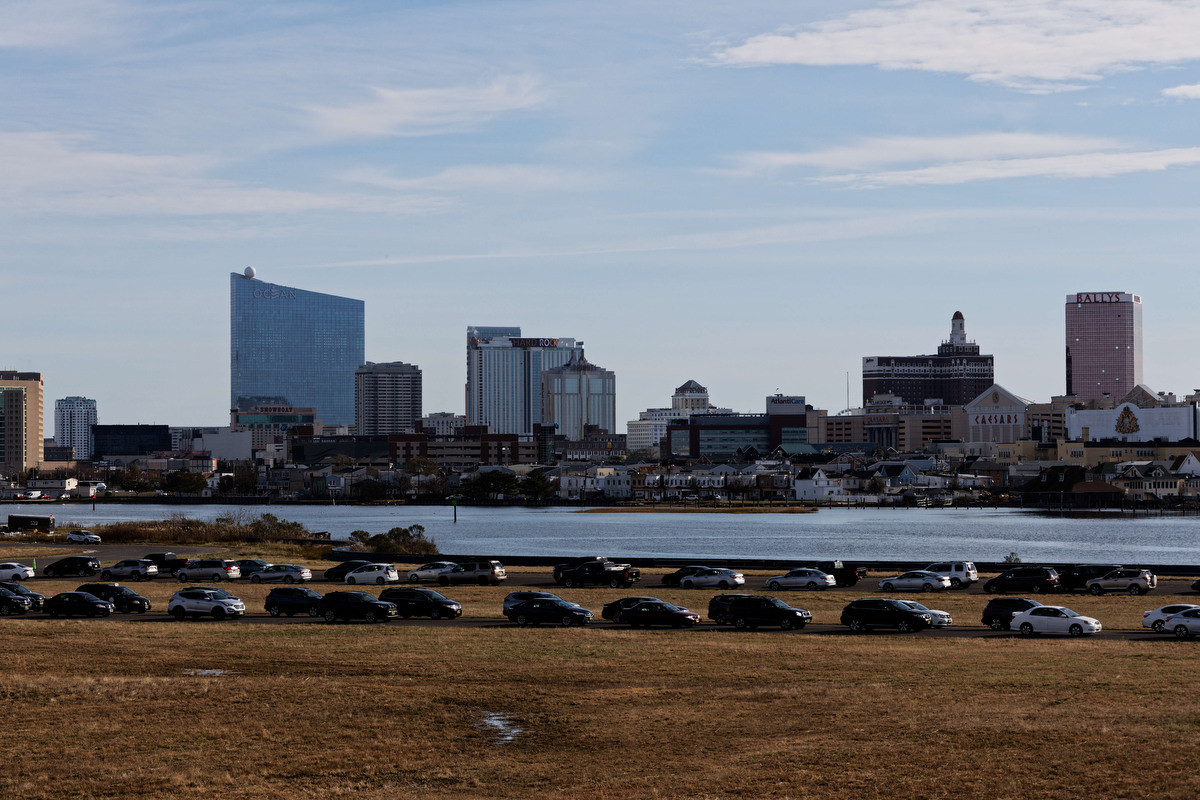
The expansion has forced New Jersey lawmakers to reopen a fight that voters thought they had settled a decade ago, when a plan to allow casinos in North Jersey was overwhelmingly rejected at the ballot box.
The looming competition is now splitting the state along geographic and economic lines. New Jersey’s Constitution currently bans casino gambling outside Atlantic City, a restriction that supporters say is necessary to protect the struggling seaside hub and the South Jersey jobs that depend on it. But a growing faction of lawmakers and racetrack operators argue that doing nothing amounts to self-destruction, as new casinos across the border threaten to siphon off customers and tax revenue that would otherwise stay in New Jersey.
“We’ve got a gun to our heads,” New Jersey State Senator Vin Gopal, who is pushing for gaming expansion, told POLITICO. “Those gambling dollars that we would see in North and Central Jersey are going to go across state lines the second these casinos open.” The urgency is no longer hypothetical: one of the three planned New York City casinos, an expansion of an existing gaming facility in Queens, is expected to open this spring. Two additional casinos, proposed for Queens and the Bronx, are slated to follow by 2030.
The developments have prompted operators at the Meadowlands and Monmouth Park, which already offer horse racing and sports betting, to push for full-scale casinos at both tracks. The operators argue they need slots and table games to compete with New York’s expanding market. “The most important question for the Legislature and the governor is: How do we as a state keep the gaming revenue in New Jersey?” said Dennis Drazin, CEO and chair of Darby Development, which operates Monmouth Park. “The state has an obligation to recognize the mega casinos popping up across state borders, and to evaluate carefully.”
Casinos remain a major source of revenue for the state. The Office of Legislative Services said in its FY2026 report that Casino Revenue Fund collections are projected to reach $996.2 million, though it attributes much of the recent growth to online gambling rather than the Atlantic City brick-and-mortar market. Privately, key political players are signaling that the expansion effort is unlikely to move this year, in part because there is little appetite for the cross-party push needed to override opposition from South Jersey Democrats who remain protective of Atlantic City’s monopoly.
Racetrack Industry Sees Expansion as a Lifeline
For racetrack operators, the push for casino gambling is also seen as a way to stabilize an industry under long-term pressure. Horse racing is estimated to support more than 3,700 jobs in New Jersey and generates roughly $75 million in annual tax revenue. But despite $20 million in temporary state subsidies extended through 2029, the industry has continued to decline over time. Racetrack operators argue that their facilities are at a competitive disadvantage compared to neighboring Northeast states that benefit from casino-integrated racing operations, and they warn that without full gambling rights, the industry may not survive the next decade.