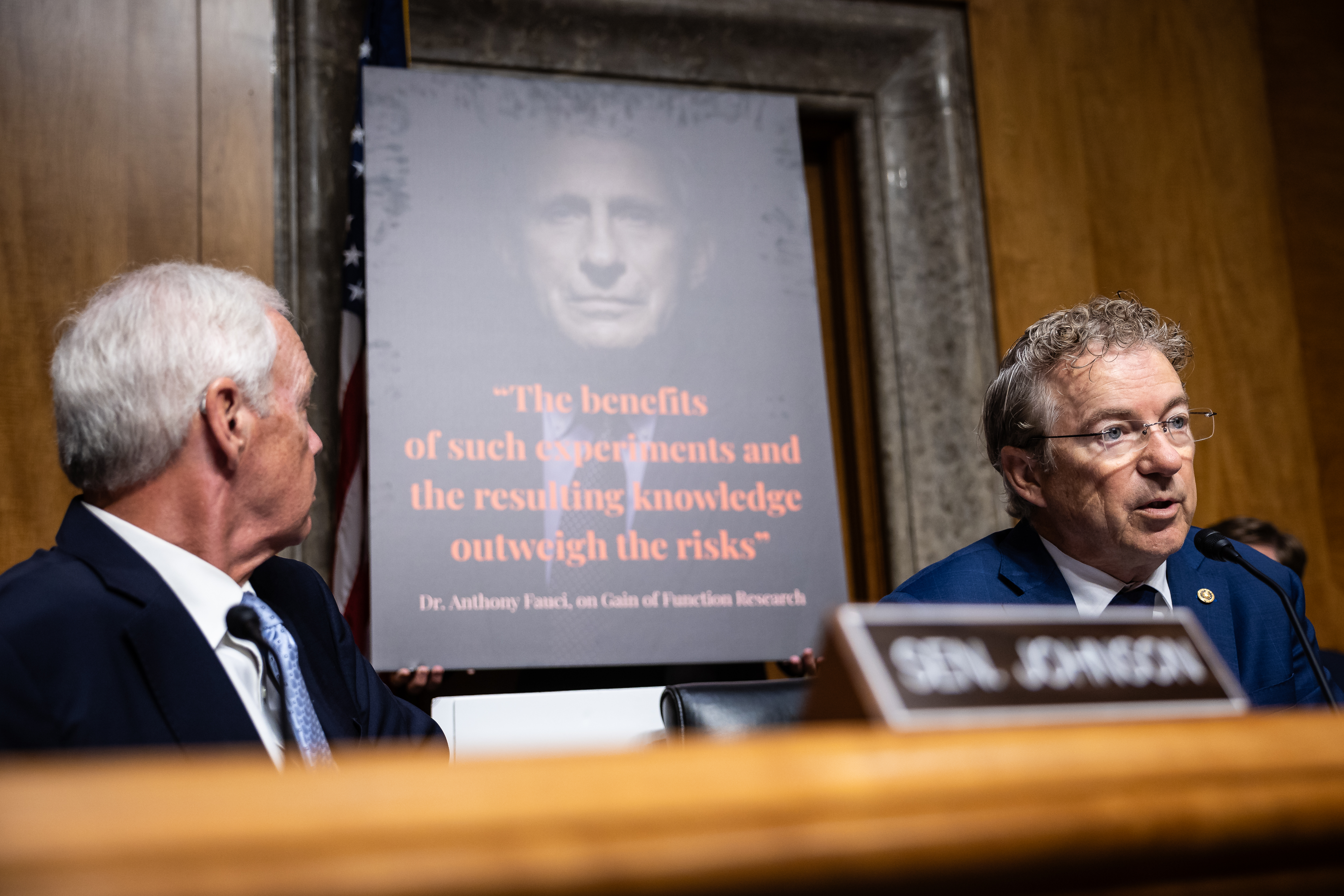
Anthony S. Fauci, declaring that he will instead take his evidence directly to the Department of Justice. The announcement marks an escalation in the Republican lawmaker's personal vendetta against the former chief medical adviser to the White House, whom he has repeatedly accused of misleading Congress during the Covid-19 pandemic.
Speaking to reporters in the Capitol, Paul said he had grown frustrated with the pace of the Senate's deliberations and was now hellbent on securing a criminal referral outside the normal committee structure. He argued that a formal vote by his colleagues would be a needless hurdle, insisting that the case against Fauci is clear-cut and that Attorney General Merrick Garland must act on it immediately.
The Kentucky senator has been Fauci's most vocal antagonist in Congress, using hearings and floor speeches to accuse him of covering up the origins of the coronavirus and of funding risky gain-of-function research at the Wuhan Institute of Virology. Fauci has denied these allegations, testifying repeatedly that he acted with scientific integrity and that the research he oversaw was legitimate and transparent.
A Break With Senate Tradition
Paul's move to bypass a Senate vote is a procedural anomaly, as criminal referrals typically originate from a committee majority vote or a chamber-wide resolution. By taking his case straight to the attorney general, he is effectively treating his personal findings as a prosecutorial brief, a tactic that legal experts say carries no binding weight on the Justice Department.
The senator's office confirmed that a formal letter has been drafted and will be delivered to the Justice Department in the coming days. It remains unclear whether Garland will acknowledge the correspondence, as the department has historically resisted pressure from individual lawmakers to open investigations based on political disagreements.
Fauci, who stepped down from his federal roles in late 2022, has become a lightning rod in the broader Republican critique of the government's pandemic response. While Paul has promised for months to pursue criminal charges, his latest gambit signals a recognition that he lacks the votes to move a referral through the Senate, where Democrats hold a slim majority and have shown little appetite for prosecuting a former public health official.
Legal observers note that even if the attorney general were to review Paul's submission, the standard for proving criminal intent against Fauci would be exceptionally high, given the absence of any prior indictment or formal finding of wrongdoing. For now, the senator's pledge appears to be as much a political statement as a legal maneuver, aimed at energizing his base ahead of a difficult re-election cycle.