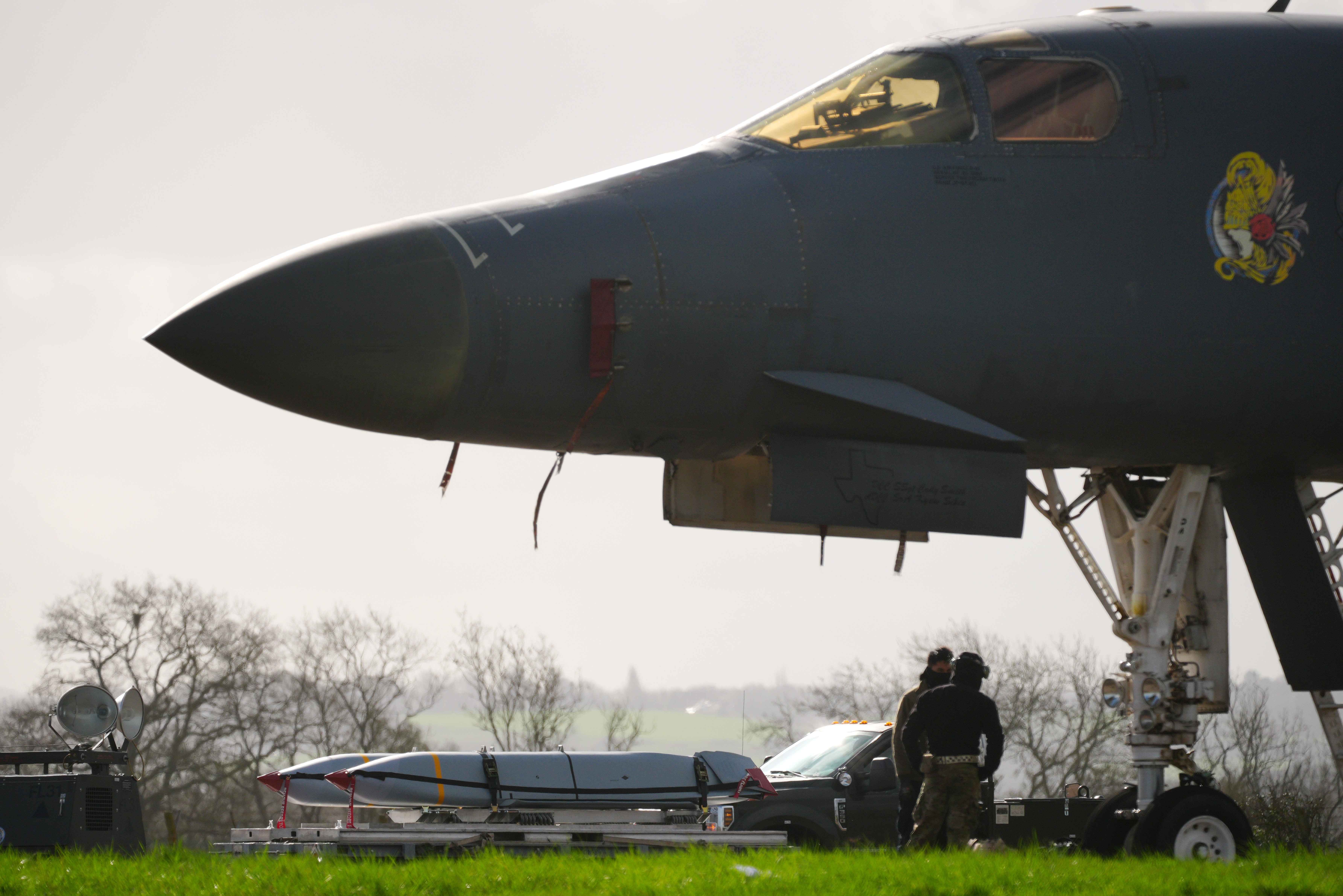
The White House had hoped that a steady, punishing air campaign would force the Islamic Republic to the negotiating table, but so far the regime has shown no willingness to bend, and the question of what comes next hangs over the conflict with no clear answer.
President Donald Trump has authorized a significant expansion of airstrikes against Iranian-linked targets, moving beyond the initial strikes on coastal missile batteries and drone launch sites. The campaign now includes attacks on Iranian air defense systems and command-and-control nodes inside Iran, marking a notable escalation in a conflict that began with limited retaliation for attacks on American forces in Iraq.
Administration officials have framed the operation as a strategy of “maximum pressure” designed to degrade Iran’s ability to strike U.S. assets and allies in the region. But privately, some Pentagon planners acknowledge that the campaign has not produced the desired political effect. The regime of Supreme Leader Ali Khamenei has absorbed the blows without signaling any interest in de-escalation, and there is growing concern inside the military that the United States is drifting toward a prolonged engagement without a defined exit.
No Clear Path to Victory
The absence of an endgame has become a central worry among foreign policy analysts and some members of Congress. Unlike the 2020 strike that killed General Qassem Soleimani, which was a discrete operation with a clear objective, the current air war is open-ended. The administration has not publicly articulated what conditions would trigger a halt to the bombing, nor what a diplomatic resolution might look like if Iran were to eventually come to the table.
Iran has responded by accelerating its nuclear program, according to intelligence reports shared with allied governments. The International Atomic Energy Agency has documented increased enrichment activity at the Natanz facility, raising fears that Tehran is using the bombing campaign as cover to push closer to weapons-grade capability. European diplomats have privately warned that the window for a negotiated halt is narrowing.
The conflict has also strained relations with key allies. France, Germany, and the United Kingdom have all expressed reservations about the scope of the American strikes, urging restraint and a return to diplomacy. The Trump administration has dismissed those concerns, arguing that only sustained military pressure can bring Iran to terms, but the lack of a unified Western front has complicated efforts to isolate Tehran economically.
On the ground in the Persian Gulf, the U.S. Navy has reinforced its carrier strike group presence, and the Pentagon has deployed additional Patriot missile batteries to protect American bases in Iraq and Saudi Arabia. Military officials say the defensive posture is necessary, but they acknowledge that it also signals a conflict that could expand rather than contract. With no diplomatic off-ramp in sight and Iran’s leadership dug in, the air war is approaching a critical juncture where the United States must either escalate further or find a way to disengage.